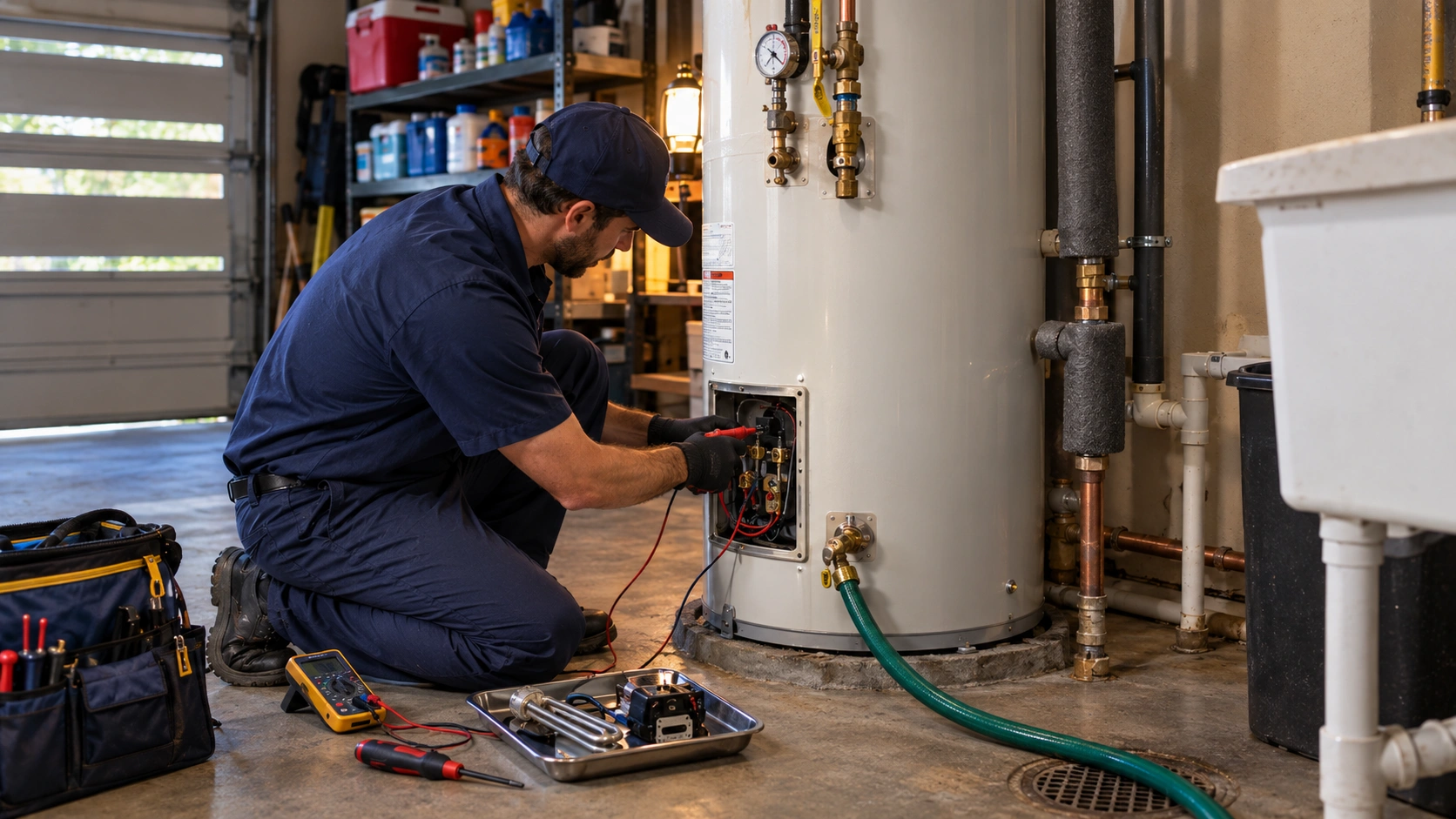
A tank water heater typically lasts about 7 to 12 years, and hard water can shorten that life when sediment is not removed. The service page publishes no component repair ranges, so compare the actual quote with half the cost of a comparable replacement rather than relying on an invented price. If an eight-year-old tank needs major work above that 50% point, replacement deserves consideration.
A heating element can be worth replacing when an electric tank is otherwise sound and the tank itself is dry and intact. A thermostat may also be a focused repair if testing shows that it is not controlling temperature correctly. Replacing either part can restore hot water without discarding a younger tank that has no corrosion or leak damage.
A leaking storage tank cannot be repaired reliably because the tank body has lost its water barrier, so replacement is the responsible option. On a tank eight or more years old, a major element, gas control, or repeated failure should prompt a close comparison with a new unit. Rust-colored water, visible tank corrosion, or a leak at the tank shell are signs not to spend on another isolated component.
Sarasota hard water leaves mineral sediment at the bottom of a tank, where heating cycles bake it into deposits around the elements. This buildup insulates elements, makes them run hotter, and consumes the protective anode rod as it corrodes. Annual flushing can remove loose sediment, but cannot reverse a leaking tank shell.
Still not sure? Read our repair or replace guide, or call us for an honest assessment. We will tell you when replacement makes more sense.